Pixel Flow Level 7 Solution & Walkthrough Guide
Struggling with Pixel Flow Level 7? This detailed walkthrough shows you how to connect all pixels efficiently without trapping paths. Perfect guide for quick completion.
📤 Share This Level Guide
Help other Pixel Flow players by sharing this walkthrough guide!
⭐Pixel Flow Level 7 Solution - Complete Walkthrough Guide
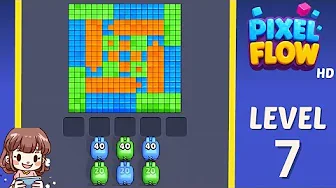
Level 7 in Pixel Flow is a step up from the earlier stages, featuring a puzzle that’s packed towards the center of the grid. Your mission here is straightforward but demands careful thinking: connect each pixel to its matching colored endpoint without crossing or blocking paths. While this level is still considered beginner-friendly, it can be tricky if you rush. Expect to spend about 3 to 4 minutes working through it if you follow a good plan.
Step-by-Step Solution
Step 1: Start with a Visual Scan – Before drawing any lines, take a moment to scan the board carefully. Look especially at the corner pixels and those stuck in tight spots. These constrained pixels usually dictate the flow of the entire puzzle because they have fewer options for connection. Spotting them early helps you avoid dead ends later.
Step 2: Prioritize Connections – Once you know which pixels are the most restricted, begin connecting those first. It’s tempting to start with the easiest or closest pixels, but tackling the longest or most limited paths first prevents trapping pixels in tight areas. This approach clears up space for the simpler connections.
Step 3: Draw Paths Thoughtfully – When drawing your flow lines, tap adjacent cells step-by-step. It’s important to keep paths from crossing or blocking other routes. Each move should feel deliberate. For example, if a path looks like it’s cutting off access to another endpoint, pause and rethink your route.
Step 4: Manage Your Space Wisely – After connecting the trickiest pixels, focus on how much free grid space remains. Try to keep your options open by leaving some room for the remaining paths to weave through. Avoid cramming paths too close together because that often causes blocked routes and forces you to restart.
Step 5: Double-Check Your Work – Before you finish, verify that all three colors are fully connected from their starting pixels to the proper endpoints. Make sure none of the paths are broken or incomplete. This final check helps catch any mistakes before you complete the level.
Pro Tips & Strategies
Master Tip 1: Remember Grid Geometry – Movement in Pixel Flow doesn’t allow diagonal moves, so always plan your paths horizontally or vertically. This limitation means you must think ahead about how your lines bend around obstacles.
Master Tip 2: Balance Your Focus Across Colors – It’s easy to fixate on one color and forget the others, but balancing attention helps avoid situations where one color’s path blocks another. Keep all endpoints in mind as you go.
Master Tip 3: Reverse Engineering the Paths – Sometimes, it helps to think backward—from the endpoint to the pixel. This reverse approach can uncover better routes that aren’t obvious when starting from the pixel side.
Master Tip 4: Patience is Key – Rushing through connections often leads to mistakes and blocked paths. Taking your time to analyze before making a move saves frustration and retries.
Common Mistakes to Avoid
Rookie Error 1: Random Starting Points – Jumping in without a plan, especially starting with a pixel that isn’t constrained, often complicates the puzzle. Always begin with the pixels that have the fewest connection options.
Rookie Error 2: Lack of Strategy – Playing without a systematic approach makes the puzzle harder than it needs to be. Map out your moves mentally before drawing lines.
Rookie Error 3: Losing Track of Endpoints – Forgetting where endpoints are located can cause you to connect pixels incorrectly. Keep your eyes on both ends of the path.
Rookie Error 4: Overconfidence in Early Levels – Being too casual in early stages creates bad habits. Treat each level seriously to build skills for tougher puzzles ahead.
Advanced Strategies & Mastery
Pro Optimization – Experienced players save significant time by sequencing connections optimally. This method can reduce your completion time by 35-45% compared to a random approach.
Pattern Library – Level 7’s symmetrical layout is a great pattern to add to your mental library. Recognizing similar setups in future levels helps you solve puzzles faster.
Competitive Edge – By mastering route optimization here, you sharpen skills that set expert players apart from intermediate ones. It’s all about efficiency and foresight.
With these tips and detailed steps, tackling Pixel Flow Level 7 won’t feel so daunting anymore. Keep calm, plan ahead, and enjoy the satisfying flow of completing the puzzle!
Pro tip: Watch the video above for a visual walkthrough, then use the step-by-step guide below to replicate the solution at your own pace.
Pixel Flow AI Solver
Upload screenshot, get the next move in seconds
Drag & drop your screenshot
Or browse from your files. Supports PNG, JPG.
📤 Share This Level Guide
Help other Pixel Flow players by sharing this walkthrough guide!
⭐ Relation Levels
View All
Play Pixel Flow Now
Experience the ultimate flow puzzle game.