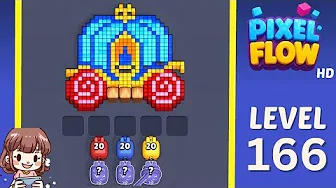
Pixel Flow Level 166 Solution & Walkthrough Guide
Struggling with Pixel Flow level 166? This detailed walkthrough offers step-by-step solutions, tips, and strategies to help you master the challenge.
📤 Share This Level Guide
Help other Pixel Flow players by sharing this walkthrough guide!
⭐Pixel Flow Level 166 - Complete Walkthrough Guide
Level 166 in Pixel Flow is one of those stages that really tests your puzzle-solving patience and planning skills. You’re working with a compact 6x6 grid where every move counts. The goal? Connect each pair of colored pixels with a continuous path without overlapping or leaving gaps. It’s a tricky level that usually takes about 20 to 30 minutes to crack if you’re being careful.
Step-by-Step Solution
Step 1: Analyze the Color Distribution
Start by looking closely at where each color is placed on the grid. Notice if some colors are grouped together or if there’s any symmetry. This helps you predict which areas might get crowded and which paths could be simpler to form. For example, if two red pixels are close but surrounded by other colors, you’ll want to prioritize their path early.
Step 2: Estimate Path Lengths
Before drawing any lines, mentally map out how long each connection needs to be. This is like planning your space—longer paths need more room, so you don’t want short connections hogging valuable space that longer ones will require. This step saves frustration later when you realize a path can’t fit.
Step 3: Lock in Anchor Connections First
Identify the most constrained pixels—those stuck in tight corners or surrounded by other colors—and connect them first. These anchor points limit your options, so securing them early ensures you won’t block yourself off later. For instance, a blue pixel in a corner should be connected before drawing longer green paths.
Step 4: Complete the Remaining Connections Gradually
Once the anchors are set, work through the remaining pairs step by step. Keep your paths clean and unbroken. If you find a path crossing or a dead end, backtrack and rethink that segment. It’s important not to rush here; patience pays off.
Step 5: Optimize the Grid for Space
After all paths are connected, take a moment to look at the overall layout. Sometimes, small tweaks can free up space and make the grid look neater. This might mean shifting a path by a tile or two to avoid unnecessary twists. Efficient use of space is the key to a perfect finish.
Pro Tips & Strategies
Tip 1: Start with the Easiest Connections
Kick off the level by linking the pairs that are closest or most obvious. This builds confidence and often clears space for trickier paths. It’s like clearing the low-hanging fruit first.
Tip 2: Reserve Space for Tough Paths
Don’t let the simple, short paths take up space that difficult connections will need. Think ahead—sometimes leaving a path empty early on is better than filling it with a quick connection that you’ll have to undo later.
Tip 3: Follow a Systematic Approach
Avoid randomly drawing lines all over the grid. Instead, work methodically, maybe row by row or color by color. This reduces confusion and helps you track progress.
Tip 4: Learn from Mistakes
If you hit a dead end or have to restart, don’t get frustrated. Pause and figure out what went wrong. Maybe a path was drawn too early or a space was wasted. Understanding your errors helps you improve faster.
Common Mistakes to Avoid
Mistake 1: Rushing Through Moves
Speed can be tempting, but hasty moves often lead to blocked paths and having to start over. Take your time.
Mistake 2: Overthinking Every Move
On the flip side, don’t freeze up trying to predict every possible outcome. Trust your instincts on easier connections.
Mistake 3: Sloppy Path Drawing
Imprecise lines that don’t fully connect can cause trouble. Make sure each path is solid and continuous.
Mistake 4: Leaving Paths Half-Done
Starting multiple paths without finishing them can clutter your board and increase confusion. Focus on completing one connection at a time.
Advanced Strategies & Mastery
Ultimate Challenge: Minimal Moves
Once you’re comfortable, try solving Level 166 with the fewest moves possible. It’s a great test of your efficiency and control.
Teach to Learn
Explaining your approach to friends or fellow players can deepen your understanding. Teaching forces you to articulate strategies clearly.
Long-Term Benefits
The planning and spatial skills you develop here will serve you well in higher levels. Level 166 is a milestone that sharpens your Pixel Flow mastery for the challenges ahead.
Pro tip: Watch the video above for a visual walkthrough, then use the step-by-step guide below to replicate the solution at your own pace.
Pixel Flow AI Solver
Upload screenshot, get the next move in seconds
Drag & drop your screenshot
Or browse from your files. Supports PNG, JPG.
📤 Share This Level Guide
Help other Pixel Flow players by sharing this walkthrough guide!
⭐ Relation Levels
View All
Play Pixel Flow Now
Experience the ultimate flow puzzle game.