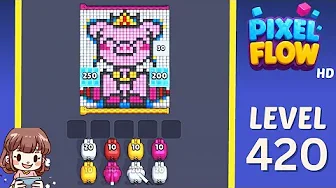
Pixel Flow Level 420 Solution & Walkthrough Guide
Struggling with Pixel Flow Level 420? This detailed walkthrough breaks down each step to help you connect all pixels without blocking paths.
📤 Share This Level Guide
Help other Pixel Flow players by sharing this walkthrough guide!
⭐Pixel Flow Level 420 - Complete Walkthrough Guide
Pixel Flow level 420 is a neat, straightforward puzzle that’s all about connecting 3 to 4 colored pixels to their matching endpoints on a 5x5 grid. Even though it looks simple, the real challenge lies in making sure none of the paths block each other. This level is often tagged as expert-level, but with the right approach, most players finish it comfortably in 2 to 3 minutes.
Step-by-Step Solution
Step 1: Scan the Grid Thoroughly
Start by taking a good look at the entire grid. Identify each colored pixel and where their matching endpoints are located. You’ll usually find red, blue, green, and yellow pixels here. Count how many paths you need to create, so you don’t lose track midway. This initial scan helps you plan your moves instead of rushing blindly.
Step 2: Spot the Constraints
Next, focus on any edge or corner pixels. These spots often have fewer ways to connect, limiting your options. Mark or mentally note these tight spots because they’re where you’ll want to start building your paths first. Ignoring these constraints early can lead to tricky blockages later.
Step 3: Connect Pixels with Limited Options First
Begin by linking pixels that have the fewest possible routes, usually the ones placed along edges or corners. For example, a pixel stuck in the bottom-left corner likely has only one or two viable paths. Drawing these flows first clears up space and reduces the chance of blocking other colors. You tap adjacent cells to create a smooth flow path.
Step 4: Build the Remaining Paths Carefully
Once the tricky edge pixels are connected, move on to the rest. Connect each remaining colored pixel one at a time, always checking that your new path doesn’t cut off space for others. Take a systematic approach—don’t rush. This way, you keep the grid flexible and avoid dead ends.
Step 5: Double-Check Your Complete Flow
Before you finish, review the entire grid. Make sure every pixel is connected to its matching endpoint with no breaks in the flow. You want to see a clean, continuous pattern with all paths fully linked—no gaps or overlaps.
Pro Tips & Strategies
Tip 1: Follow Natural Flow Lines
Pay attention to the natural lines the pixels suggest. The grid often gives subtle hints about the best routes, like a pixel’s position nudging you in a certain direction. Trust these visual cues—they save a lot of guesswork.
Tip 2: Keep Flows Smooth and Continuous
Try to avoid unnecessary twists and turns. Smooth lines are easier to manage and less likely to interfere with other paths. Zigzags might seem clever but often cause blockages.
Tip 3: Visualize the Full Flow Before Drawing
Spend a moment imagining the entire flow pattern before you start connecting pixels. This mental roadmap helps you plan efficient moves, reducing backtracking and frustration.
Tip 4: Aim for Balanced Flows
Create flows that feel balanced and evenly spread across the grid. This harmony prevents overcrowding in one area and keeps the puzzle manageable.
Common Mistakes to Avoid
Mistake 1: Starting From the Center
A lot of players jump straight to connecting pixels in the center, thinking it’s easiest. But this often blocks critical edge paths that have limited options. Always tackle edges and corners first to keep your routes open.
Mistake 2: Prioritizing Short Paths
It might seem natural to connect short paths first, but this can waste valuable space on the grid. Begin with the longer, more complicated paths when you have the most room to work with.
Mistake 3: Trapping Pixels
Be careful not to draw flows that surround unconnected pixels, effectively trapping them with no escape. Always leave enough space so every pixel can reach its endpoint.
Mistake 4: Trying to Cross Paths
Remember, paths in Pixel Flow can’t cross each other. They must run parallel or occupy different sections of the grid. Trying to cross flows will only lead to frustration.
Advanced Strategies & Mastery
Speedrun Strategy
If you’re aiming to speedrun, memorize common pixel setups and their best solutions. Execute paths from edges inward for maximum efficiency. With practice, expert players can clear this level in just 30 to 45 seconds.
Minimal Moves Challenge
Challenge yourself to solve level 420 using the fewest moves possible—usually around 15 to 20. This means perfect planning and zero backtracking, which really sharpens your puzzle skills.
Pattern Mastery
Notice the symmetrical pattern in this level? It’s a recurring design you’ll see again in levels 430, 440, and 450. Mastering it now gives you a long-term edge in future puzzles.
---
Hope this walkthrough helps you breeze through Pixel Flow Level 420! Keep these tips in mind, and you’ll avoid the common pitfalls that trip up many players. Happy puzzling!
Pro tip: Watch the video above for a visual walkthrough, then use the step-by-step guide below to replicate the solution at your own pace.
Pixel Flow AI Solver
Upload screenshot, get the next move in seconds
Drag & drop your screenshot
Or browse from your files. Supports PNG, JPG.
📤 Share This Level Guide
Help other Pixel Flow players by sharing this walkthrough guide!
⭐ Relation Levels
View All
Play Pixel Flow Now
Experience the ultimate flow puzzle game.