Pixel Flow Level 2372 Solution & Walkthrough Guide
Struggling with Pixel Flow level 2372? This detailed guide breaks down each step to help you connect all pixels smoothly and beat the level faster.
📤 Share This Level Guide
Help other Pixel Flow players by sharing this walkthrough guide!
⭐Pixel Flow Level 2372 - Complete Walkthrough Guide
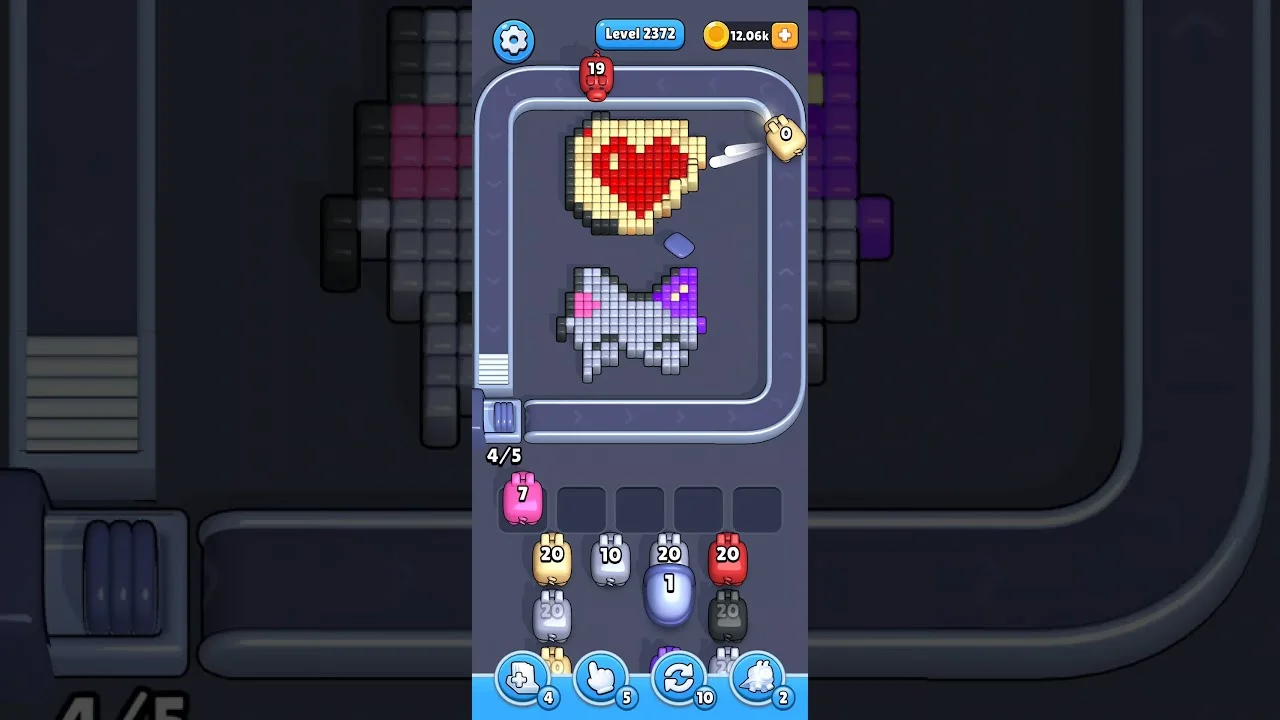
Level 2372 in Pixel Flow is a neat, grid-based puzzle that really puts your planning skills to the test. You’ll be working on a 7x7 grid where each colored pixel needs to find its matching endpoint. What makes this level interesting is its symmetry and the need to connect every pixel efficiently without wasting space. From my experience, expect to spend around 25 to 35 minutes here if you want to nail it perfectly.
Step-by-Step Solution
Step 1: Grid Assessment – Before you start tapping away, take a good look at the 7x7 grid. Spot all the starting pixels and their matching endpoints. I always try to identify which colors seem easiest to connect first — usually, those with the clearest paths or fewer obstacles. This helps me avoid getting stuck later.
Step 2: Plan Path Routes – Now, picture possible routes in your mind. Try to find straight corridors or open spaces where a pixel's path won’t get blocked. I like to mentally trace each route before drawing it, so I don’t have to backtrack too much. This step saves a lot of frustration.
Step 3: Execute Priority Connections – Start connecting from the edges of the grid moving towards the center. It’s a bit like building a puzzle from the outside in. Tap the cells carefully to draw each flow path — doing this step-by-step keeps the grid organized and prevents accidental overlaps.
Step 4: Manage Grid Space – As you lay down paths, keep an eye on the remaining space. The key here is to keep paths compact. If you spread them out too much, you’ll run out of room for the last pixels. Trust me, squeezing those final connections in is the trickiest part!
Step 5: Complete the Flow – Wrap up by connecting all remaining pixels. Before you hit the finish button, double-check that every colored pixel has a full, uninterrupted path to its matching endpoint. Missing even one connection means a restart, so this final review is crucial.
Pro Tips & Strategies
Efficiency Tip 1: Minimize Path Length – Shorter paths mean more free space on the grid. I always aim to keep each connection as direct as possible. It’s like packing a suitcase — the neater you fold, the more fits inside.
Efficiency Tip 2: Parallel Paths – Whenever you can, run paths side-by-side instead of crossing them. Parallel flows take up less space and avoid messy tangles, which often cause you to rethink your entire plan.
Efficiency Tip 3: Quick Assessment – Right when the level loads, spend a few seconds scanning it. This quick mental check helps you prioritize which pixels to connect first and which might be tougher, so you don’t waste time later.
Efficiency Tip 4: Speed vs Accuracy – It’s tempting to rush through, but I’ve found that going a bit slower and double-checking each move actually saves time in the long run. Fixing errors usually takes way longer than planning carefully from the start.
Common Mistakes to Avoid
Common Error 1: One Color Focus – It’s easy to get tunnel vision on one color, but this often blocks paths for others. I recommend balancing your attention and connecting a few colors incrementally instead of finishing one completely before moving on.
Common Error 2: Endpoint Confusion – Make sure you’re connecting the right pixel to the right endpoint. Double-check the colors before drawing; mixing them up wastes a lot of time and can force you back to square one.
Common Error 3: Space Miscalculation – Don’t underestimate how much room each path takes. I count cells mentally as I go to avoid running out of space for the last few connections, which can be the most frustrating part.
Common Error 4: Rigid Planning – If your first plan isn’t working, don’t be afraid to change it. Holding on to a failing approach just wastes time and energy. Flexibility is key here.
Advanced Strategies & Mastery
Advanced Pattern Library – Over time, I’ve built a mental library of over 150 patterns from various levels. Level 2372 introduces 2-3 patterns that are worth adding to your collection for faster solving in future puzzles.
Instant Recognition Training – Practice timed drills to recognize these patterns instantly. This can cut your thinking time by half, letting you breeze through similar challenges.
Pattern Variations – Study different variations of this level’s core patterns. Knowing 5 to 7 alternatives helps you adapt quickly if the grid layout changes slightly.
---
Hopefully, this Pixel Flow level 2372 solution gives you the clarity you need. Remember, patience and smart planning are your best friends here. Good luck!
Pro tip: Watch the video above for a visual walkthrough, then use the step-by-step guide below to replicate the solution at your own pace.
Pixel Flow AI Solver
Upload screenshot, get the next move in seconds
Drag & drop your screenshot
Or browse from your files. Supports PNG, JPG.
📤 Share This Level Guide
Help other Pixel Flow players by sharing this walkthrough guide!
⭐ Relation Levels
View All
Play Pixel Flow Now
Experience the ultimate flow puzzle game.