Pixel Flow Level 1721 Solution & Walkthrough Guide
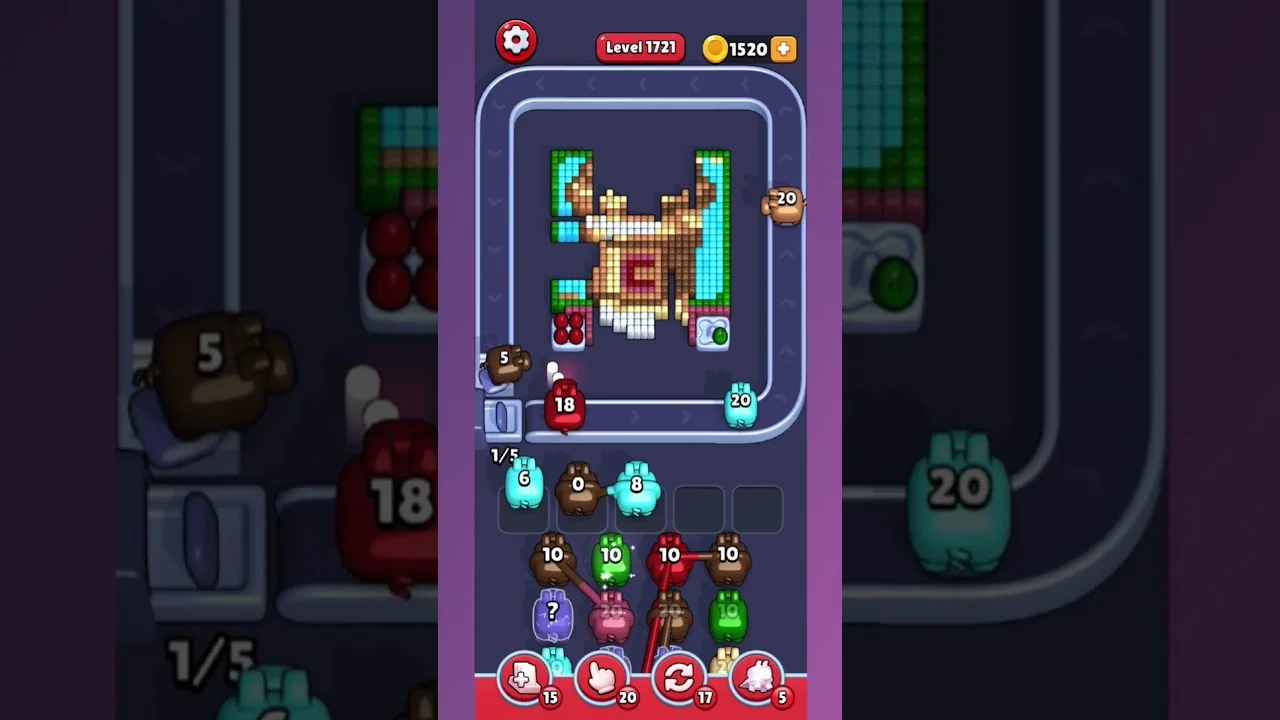
Struggling with Pixel Flow Level 1721? This detailed walkthrough offers step-by-step solutions, pro tips, and smart strategies to help you clear the puzzle smoothly.
📤 Share This Level Guide
Help other Pixel Flow players by sharing this walkthrough guide!
⭐Pixel Flow Level 1721 - Complete Walkthrough Guide
Welcome to Pixel Flow Level 1721! This puzzle sits right in the middle of the difficulty scale, so expect a good challenge. Your goal is to connect matching colored pixels by drawing continuous flow paths across the grid. The tricky part? You have to carefully plan your routes to fit within the limited space without blocking other connections. From my experience, this level usually takes about 25 to 35 minutes to crack, especially if you want a clean solution.
Step-by-Step Solution
Step 1: Endpoint Identification
Start by scanning the board to find all the pixel endpoints. Take a moment to note exactly where each color starts and ends. This helps avoid confusion later. I like to mentally picture possible paths and how they might overlap. It’s easier to plan once you know which pairs might clash.
Step 2: Path Hierarchy
Next, set a priority for connecting the pixels. Focus first on the pairs with the tightest spaces or those near the center, since these are harder to fit later. Leave the edge pixels for last, as they usually have more room to breathe. This order helps prevent dead ends and forced restarts.
Step 3: Execution Phase
Now, start drawing your paths by tapping the cells. Make sure each line is continuous and connects the right endpoints. Take your time here—rushing can lead to overlapping paths. If you notice a path blocking another, pause and rethink before proceeding.
Step 4: Conflict Resolution
If you hit a spot where two paths interfere, don’t panic. Try adjusting the order of your connections or rerouting one of the flows. Sometimes, simply changing which path you draw first opens up new possibilities. This trial-and-error is part of the fun!
Step 5: Completion
Keep going until every pixel is connected with a clear, uninterrupted path. The grid should be fully covered without gaps or overlaps. When you see the whole board lit up by your flows, you’ll know you’ve nailed it.
Pro Tips & Strategies
Key Strategy 1: Path Length Planning
Before you start drawing, think about which connections will need the longest routes. Tackling these first helps you secure essential space early on. For example, a red pair that stretches across the board should be your priority over a short blue pair near the edge.
Key Strategy 2: Bottleneck Management
Watch out for narrow spots where multiple paths must cross. These bottlenecks can be frustrating if you don’t plan carefully. Try to visualize which paths can share these tight lanes without blocking each other.
Key Strategy 3: Edge Utilization
Edges are your friends. They offer natural boundaries and often provide extra room to snake your paths around the board. Using edges smartly can save valuable space in the center, where most conflicts happen.
Key Strategy 4: Sequential Thinking
Think several moves ahead. Every path you draw affects the options left for the remaining connections. It's like a domino effect—one wrong line can trap others. Planning sequences helps avoid those frustrating dead ends.
Common Mistakes to Avoid
Blunder 1: No Planning
Jumping straight into drawing without a plan almost always leads to frustration here. Take a moment upfront to map out your moves.
Blunder 2: Endpoint Mismatch
Connecting pixels to the wrong endpoints means you’ll have to start over. Double-check pairs before you commit to a path.
Blunder 3: Space Waste
Don’t let your paths wander unnecessarily. Wasting grid space early on can block critical routes later, forcing you to reset.
Blunder 4: Giving Up
This one can be tough, especially if you’re stuck. But pushing through the challenge is how you improve. Take breaks if you need to, then come back fresh.
Advanced Strategies & Mastery
Advanced Path Optimization
Once you’re comfortable, try to trim down your paths to use less grid space. Optimizing routes can cut your space usage by up to 20-30%, making your solutions neater and more elegant.
Competitive Play
If you’re competing or aiming for speed, focus on balancing quick execution with accuracy. Efficient routing saves time but rushing leads to mistakes.
Skill Transfer
The spatial reasoning and planning skills from Level 1721 will help you tackle harder levels later. Mastering these techniques now sets you up for success across the game.
Hope this guide helps you breeze through Pixel Flow Level 1721. Keep practicing, and those tricky puzzles will start feeling like second nature!
Pro tip: Watch the video above for a visual walkthrough, then use the step-by-step guide below to replicate the solution at your own pace.
Pixel Flow AI Solver
Upload screenshot, get the next move in seconds
Drag & drop your screenshot
Or browse from your files. Supports PNG, JPG.
📤 Share This Level Guide
Help other Pixel Flow players by sharing this walkthrough guide!
⭐ Relation Levels
View All
Play Pixel Flow Now
Experience the ultimate flow puzzle game.