Pixel Flow Level 1601 Solution & Walkthrough Guide
Struggling with Pixel Flow Level 1601? This detailed walkthrough breaks down every step, strategy, and common mistakes to help you master the puzzle.
📤 Share This Level Guide
Help other Pixel Flow players by sharing this walkthrough guide!
⭐Pixel Flow Level 1601 - Complete Walkthrough Guide
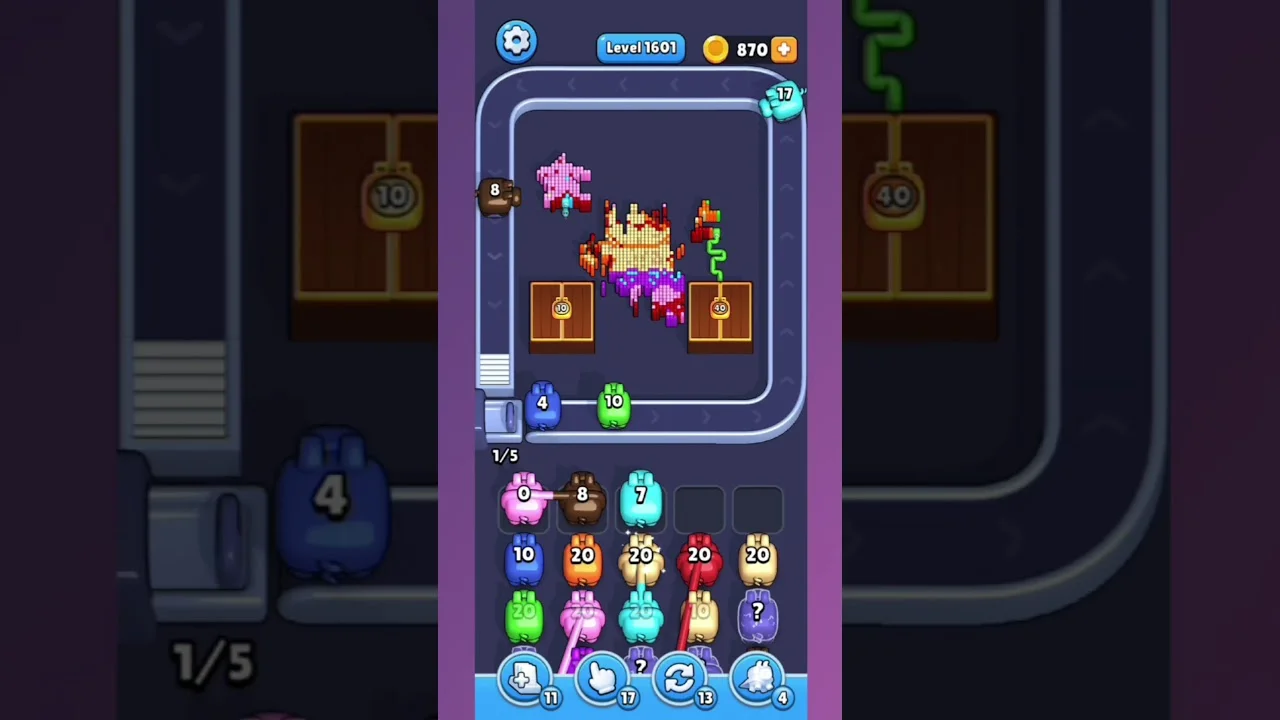
Welcome to Pixel Flow Level 1601! This puzzle is a bit of a brain teaser, sitting comfortably in the moderate difficulty range. Your goal here is to connect matching colored pixels by drawing continuous flow paths across the grid. What’s tricky about this level is balancing the limited space while making sure every path is complete without crossing others. From my experience, expect to spend around 25 to 35 minutes figuring out the perfect pixel flow pattern — it’s challenging but really rewarding once you nail it.
Step-by-Step Solution
Step 1: Endpoint Identification
Start by carefully spotting all the pixel endpoints on the grid. Take a moment to note exactly where each colored pixel is located. This helps you mentally map out potential routes and avoid running into conflicts later. Trust me, rushing this part can cost you time down the line.
Step 2: Path Hierarchy
Next, set a clear priority for which connections to tackle first. Usually, it’s best to link the most constrained pixel pairs—those stuck in tight spots—before moving on to pixels near the edges where there’s more breathing room. This hierarchy prevents you from blocking yourself off.
Step 3: Execution Phase
Now, start drawing your paths. Tap on the cells to create continuous lines connecting the matching colors. As you go, keep an eye on how each new path affects the space left on the grid. It’s a bit like weaving threads without tangling them.
Step 4: Conflict Resolution
If you hit a snag and two paths clash, don’t panic. Instead, try adjusting the order in which you connect the pixels. Sometimes, swapping your sequence opens up new routes that weren’t obvious before. This step is all about flexibility and patience.
Step 5: Completion
Finally, once every colored pixel has a clear, uninterrupted path to its partner, you’re done! Each flow should be solid and unbroken, with no overlaps or gaps.
Pro Tips & Strategies
Key Strategy 1: Path Length Planning
Before you start connecting, look at which pixel pairs will need the longest paths. Tackling those first helps you secure enough space, so you’re not squeezed later. For example, if a blue pixel pair is far apart, connect them early to avoid blocking shorter paths.
Key Strategy 2: Bottleneck Management
Watch out for bottleneck spots where multiple paths must squeeze through limited cells. Planning these carefully is crucial because one wrong move here can ruin the entire solution.
Key Strategy 3: Edge Utilization
Don’t forget the edges of the grid! Using the edges effectively can save tons of space. Often, routing some flows along the perimeter frees up the center for more complex connections.
Key Strategy 4: Sequential Thinking
Think a few steps ahead. Every path you draw changes the grid landscape and affects where other flows can go. Keeping this in mind helps avoid dead ends.
Common Mistakes to Avoid
Blunder 1: No Planning
Jumping straight into drawing flows without a plan almost always leads to frustration. Take your time mapping routes first.
Blunder 2: Endpoint Mismatch
Connecting a pixel to the wrong endpoint is a costly mistake that usually means starting all over. Double-check before you commit.
Blunder 3: Space Waste
Don’t let inefficient paths hog space. Wasting grid cells early on can leave no room for the trickier connections at the end.
Blunder 4: Giving Up
This level can be tough, but quitting won’t help. Stick with it, and you’ll improve your skills with every attempt.
Advanced Strategies & Mastery
Advanced Path Optimization
Once you’re comfortable, try refining your paths to use less space. Optimizing your routes can cut down grid usage by 20-30%, making your solutions cleaner and more elegant.
Competitive Play
If you’re going for speed or competing, focus on balancing quick, accurate routing with smart planning. Efficiency is key here.
Skill Transfer
The spatial reasoning and planning skills you build here will pay off big time in higher levels. Mastering Level 1601 sets a solid foundation for tackling more complex puzzles ahead.
Pro tip: Watch the video above for a visual walkthrough, then use the step-by-step guide below to replicate the solution at your own pace.
Pixel Flow AI Solver
Upload screenshot, get the next move in seconds
Drag & drop your screenshot
Or browse from your files. Supports PNG, JPG.
📤 Share This Level Guide
Help other Pixel Flow players by sharing this walkthrough guide!
⭐ Relation Levels
View All
Play Pixel Flow Now
Experience the ultimate flow puzzle game.