Pixel Flow Level 1325 Solution & Walkthrough Guide
Struggling with Pixel Flow Level 1325? This detailed walkthrough breaks down every step, tips, and common pitfalls to help you solve the 5x5 grid puzzle with ease.
📤 Share This Level Guide
Help other Pixel Flow players by sharing this walkthrough guide!
⭐Pixel Flow Level 1325 - Complete Walkthrough Guide
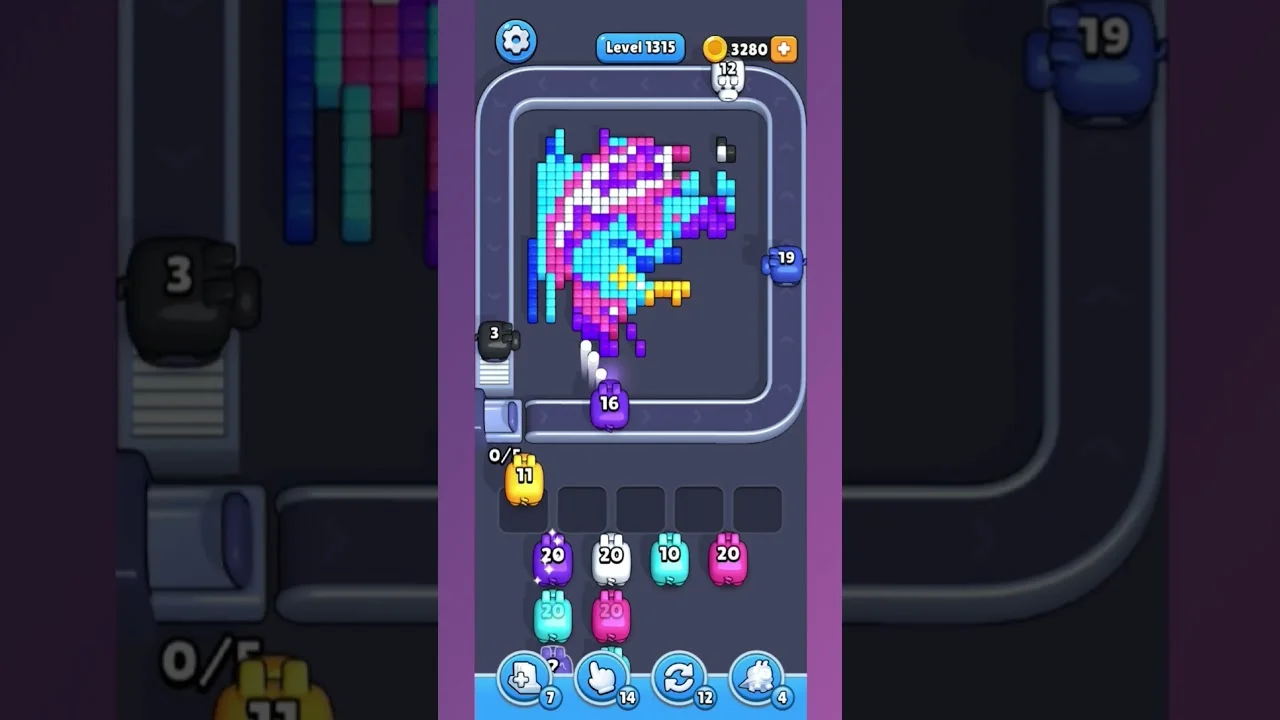
Level 1325 in Pixel Flow is a moderately challenging puzzle set on a 5x5 grid. Your goal here is to connect every colored pixel to its matching endpoint without overlapping paths. What makes this level interesting is the increased number of color pairs and the tight space you have to work with. It’s not just about linking dots—it’s about planning your routes carefully to avoid blocking yourself later. Expect to spend around 15 to 20 minutes if you take your time and think through your moves.
Step-by-Step Solution
Step 1: Strategic Planning
Before you start drawing any lines, take a moment to scan the board. Identify where each colored pixel and its endpoint sits. Look for obvious bottlenecks or tight spots where paths might clash. Planning these routes mentally helps avoid scrambling later. For example, if you see two endpoints near each other, think about which path would be shortest and leave space for other colors.
Step 2: Corner and Edge Pixels First
Corners and edges are the trickiest because they have limited directions to go. I always tackle these first since they have fewer options. Connecting these early clears up a lot of potential blockages and gives you a solid foundation. For instance, if a red pixel is stuck in a corner, locking in that path early prevents accidentally trapping it.
Step 3: Main Path Creation
Next, focus on the dominant color pairs that require longer or more direct paths. Keep these flows as straightforward as possible to save space. Avoid zig-zags unless absolutely necessary. This way, you leave room in the middle for smaller or more complex routes. Think of it like highways—you want your biggest roads clear and efficient.
Step 4: Fill Gaps Thoughtfully
With the main paths drawn, it’s time to connect the remaining pixels. Use the leftover grid space carefully. If you rush here, you might create dead ends that trap pixels. Move methodically, checking if each path blocks another before committing. Patience pays off, especially when you consider how one wrong move can ruin the entire flow.
Step 5: Completion Check
Before you finish, double-check that every colored pixel is linked perfectly to its matching endpoint. The entire 5x5 grid should be filled with continuous, unbroken paths. No pixels should be left isolated, and no lines should cross. This final review is crucial because it’s easy to miss a tiny gap or a disconnected pixel.
Pro Tips & Strategies
Advanced Tip 1: Use Endpoint Proximity to Your Advantage
Pixels closer to their endpoints are often easier to connect last. I like to leave those for the final moves because they’re less likely to interfere with other paths. This way, you can focus on more complicated connections first.
Advanced Tip 2: Parallel Paths Are Your Friends
Remember, paths can’t cross but they can run side by side. Use this to your advantage by lining up flows next to each other, maximizing the use of space. It’s like threading multiple strands through a narrow tube without tangling.
Advanced Tip 3: Identify the Most Constrained Pixels Early
Some pixels have very limited options—maybe because they’re boxed in or near other colors. Spot these early and prioritize connecting them. This keeps your options open and avoids frustrating deadlocks later.
Advanced Tip 4: Verify Before Finalizing
Always do a quick check before you lock in your solution. Make sure all paths are complete, no pixels are left out, and no routes block each other. This habit saves you from having to backtrack and redo large sections.
Common Mistakes to Avoid
Mistake 1: Blocking Corners with Interior Paths
One of the most common pitfalls is accidentally sealing off corner pixels by running other paths through their access points. Keep corners free and clear to avoid trapping those pixels.
Mistake 2: Overcomplicating Paths
Using more cells than needed for a connection wastes precious space and can prevent other colors from fitting. Aim for the shortest, most direct routes.
Mistake 3: Mixing Up Similar Colors
It’s easy to confuse colors that look alike, especially under pressure. Take your time to double-check color matches before connecting.
Mistake 4: Rushing Through the Puzzle
Pixel Flow is a game that rewards patience. Rushing typically leads to mistakes that cost time and cause frustration. Slow down and think through each move.
Advanced Strategies & Mastery
Deep Analysis of Color Relationships
Once you’ve completed the basic solution, try analyzing how the colors relate spatially. Understanding these relationships helps you spot shortcuts and alternative routes for faster solving.
Combine Pattern Recognition with Adaptation
Use your experience to recognize common patterns in pixel flows, but stay flexible. Sometimes, you’ll need to adjust your plan on the fly when unexpected blockages appear.
Level 1325 as a Progression Marker
Clearing Level 1325 confidently shows you’re ready for more complex puzzles. It’s a solid milestone that bridges beginner and intermediate gameplay, so mastering it is a big win!
Pro tip: Watch the video above for a visual walkthrough, then use the step-by-step guide below to replicate the solution at your own pace.
Pixel Flow AI Solver
Upload screenshot, get the next move in seconds
Drag & drop your screenshot
Or browse from your files. Supports PNG, JPG.
📤 Share This Level Guide
Help other Pixel Flow players by sharing this walkthrough guide!
⭐ Relation Levels
View All
Play Pixel Flow Now
Experience the ultimate flow puzzle game.