Pixel Flow Level 1171 Solution & Walkthrough Guide
Struggling with Pixel Flow level 1171? This detailed walkthrough breaks down each step, offering expert tips and strategies to help you solve it faster.
📤 Share This Level Guide
Help other Pixel Flow players by sharing this walkthrough guide!
⭐Pixel Flow Level 1171 - Complete Walkthrough Guide
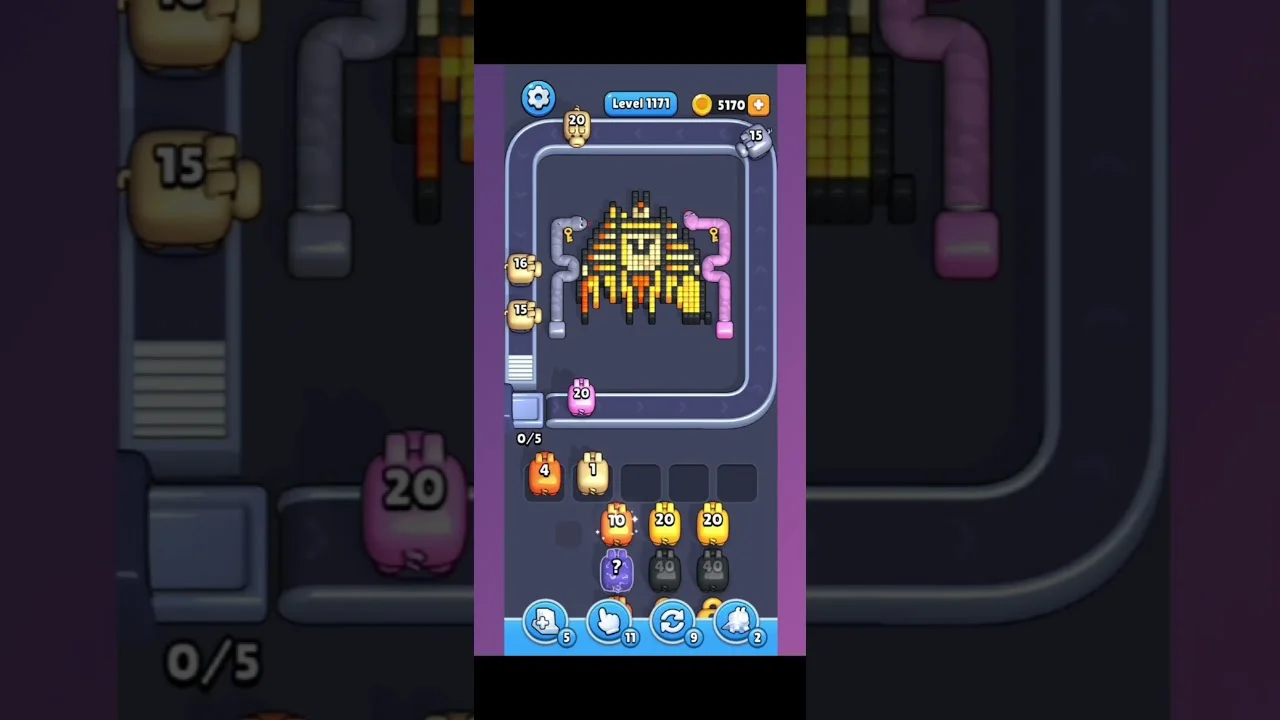
Level 1171 in Pixel Flow is definitely one that tests your patience and strategic thinking. You’ll need to connect eight different colored pixel pairs without crossing lines or blocking your paths. It’s not just about quick taps here; it’s about carefully planning each move to avoid getting stuck in those tight bottleneck spots. On average, players spend around 12 to 18 minutes solving this one, so don’t worry if it takes you a bit longer the first few times.
Step-by-Step Solution
Step 1: Color Analysis – The first thing I do is scan the board and identify all eight color pairs. Here, you’ve got red, blue, green, yellow, and a few others. Knowing exactly where each pixel and its endpoint are helps you map out which connections seem simpler or more complicated. I usually pick one that looks straightforward to start with—it helps build momentum.
Step 2: Edge Pixels First – Pixels sitting on the edges or corners can be tricky since their routing options are limited. I always connect these first because locking them in early prevents headaches later on. For example, a corner pixel often only has one or two directions to go, so securing those paths early frees up the center space for more complex flows.
Step 3: Create Main Paths – Next, I tackle the big players—usually the red and blue pixels—by tracing their paths carefully. I tap cells to create continuous flow lines, making sure I don’t block off routes needed for other colors. This part requires a bit of foresight; sometimes I pause and imagine if a path will block another before drawing it out.
Step 4: Fill Remaining Space – After the main flows are set, I connect the remaining color pairs. This is where you need to be mindful of space. Using parallel paths rather than winding ones helps avoid collisions. For example, if green and yellow flows run close, I keep them side by side but separated to avoid confusion.
Step 5: Final Check – Before you claim victory, double-check that every colored pixel is linked to its endpoint and that no cells are left unused. The perfect solution covers the entire grid with unbroken flows, so don’t rush this step—it’s easy to miss a tiny gap or an unconnected pixel.
Pro Tips & Strategies
Practical Tip 1: One Color at a Time – Focusing on a single color pair before moving on helps keep things tidy. Jumping between colors can get overwhelming and lead to mistakes.
Practical Tip 2: Path Visualization – Before you start drawing, take a moment to picture the entire path in your head. It saves you from having to backtrack and redo segments mid-way.
Practical Tip 3: Endpoint Awareness – Always keep the endpoints in sight. Sometimes, in complex puzzles like this, it’s easy to lose track of where you need to end up, which causes unnecessary detours.
Practical Tip 4: Consistent Method – Developing your own solving routine improves both speed and accuracy. Over time, you’ll recognize patterns and know instinctively which paths to take.
Common Mistakes to Avoid
Error 1: Random Connections – Jumping in without a plan usually backfires. It’s tempting to connect any obvious pairs quickly, but this often leads to blocked paths and frustration.
Error 2: Ignoring Corners – Leaving corner pixels until the end is a common trap. Because they have fewer options, it’s better to lock them in early to keep your options open.
Error 3: Wasting Grid Space – Long, winding paths look neat but can waste valuable space. Aim for the most direct route that doesn’t interfere with others.
Error 4: Not Using Undo – Don’t be afraid to hit undo. It’s your best friend when experimenting with paths. Sometimes a quick reset can save you from hours of headache.
Advanced Strategies & Mastery
Tournament Preparation – If you’re aiming to compete, practice this level until you can solve it in under 30 seconds. Speed comes from familiarity and smooth execution.
Consistency Metrics – Track your attempts over time. Getting a 98% success rate across 15 tries means you’re mastering the level.
Pressure Performance – Try practicing under timed conditions or with distractions. Staying calm and focused is what separates great players from the rest.
---
With these tips and this step-by-step guide, Pixel Flow level 1171 won’t feel so intimidating anymore. Take your time, plan carefully, and soon you’ll be breezing through this challenging puzzle!
Pro tip: Watch the video above for a visual walkthrough, then use the step-by-step guide below to replicate the solution at your own pace.
Pixel Flow AI Solver
Upload screenshot, get the next move in seconds
Drag & drop your screenshot
Or browse from your files. Supports PNG, JPG.
📤 Share This Level Guide
Help other Pixel Flow players by sharing this walkthrough guide!
⭐ Relation Levels
View All
Play Pixel Flow Now
Experience the ultimate flow puzzle game.