Pixel Flow Level 1161 Solution & Walkthrough Guide
Struggling with Pixel Flow Level 1161? This detailed walkthrough breaks down each step to help you solve the puzzle efficiently and avoid common mistakes.
📤 Share This Level Guide
Help other Pixel Flow players by sharing this walkthrough guide!
⭐Pixel Flow Level 1161 - Complete Walkthrough Guide
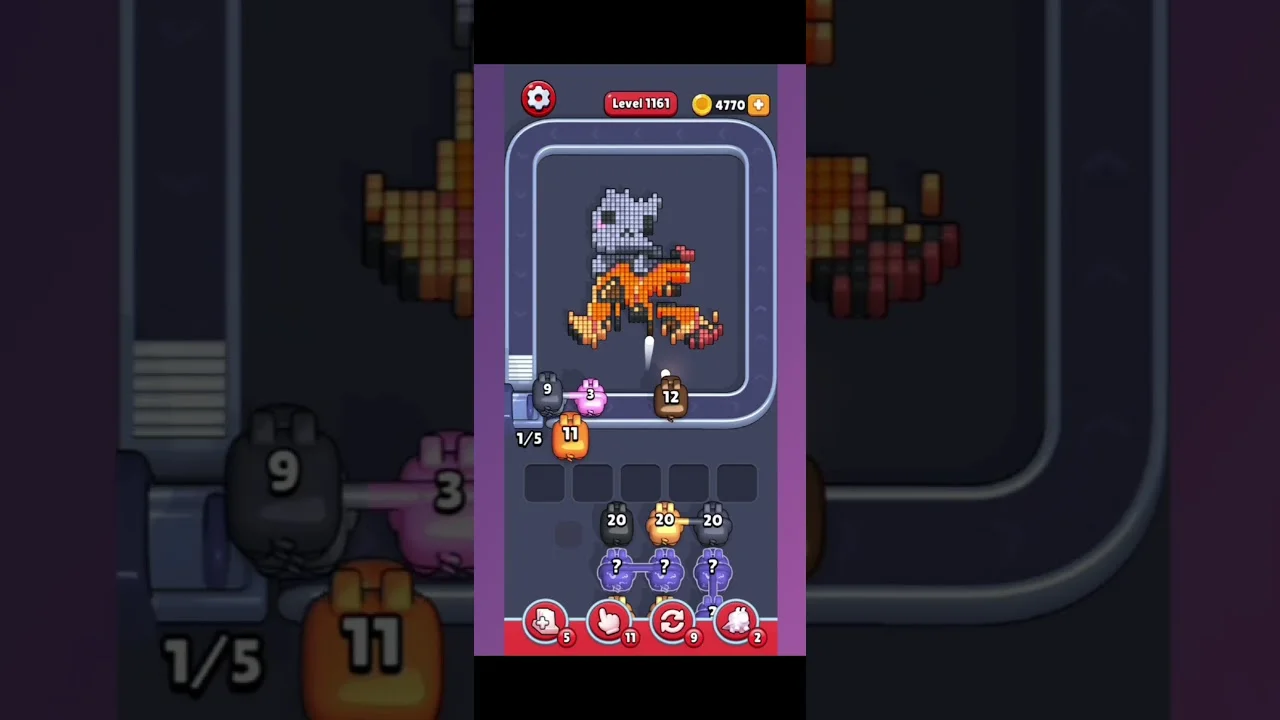
Welcome to Pixel Flow Level 1161! This puzzle sits right in the middle ground in terms of difficulty, offering a satisfying challenge if you enjoy thinking ahead. Your goal here is to connect matching colored pixels by drawing continuous flow paths without overlapping. The grid’s limited space means you have to be smart about where you place each path. From my experience, expect to spend around 10 to 15 minutes cracking the pattern — it’s not a quick fix, but it’s definitely doable with some careful planning.
Step-by-Step Solution
Step 1: Bottleneck Identification – The first thing I do is scan the board for tight spots where several paths need to squeeze through. These bottlenecks are tricky because you only have so much room to work with, and one wrong move can block other connections.
Step 2: Bottleneck Resolution – Once you spot these tight zones, focus on untangling them. Plan the order in which you’ll draw each path here carefully. Sometimes, you have to sacrifice the shortest route for one color to keep space open for others. It might feel frustrating, but this step is crucial to avoid dead ends.
Step 3: Open Space Utilization – After handling the bottlenecks, the rest of the grid usually opens up. Use these larger areas to connect pixels more freely. This part feels a bit easier because you have more room to experiment without immediately blocking yourself.
Step 4: Final Adjustments – Before wrapping up, double-check all your paths. Sometimes a small tweak here or there can make your flow smoother and free up extra space. This step helps optimize the solution so it’s not just correct but neat.
Step 5: Complete Solution Audit – Finally, review the entire board to catch any overlaps or inefficient routes. This final audit ensures your solution holds up and that no paths are unnecessarily long or convoluted.
Pro Tips & Strategies
Key Strategy 1: Path Length Planning – Before you even start connecting pixels, take a moment to identify which color pairs will need the longest paths. Tackling those first helps you claim the necessary space early on and avoids having to reroute later.
Key Strategy 2: Bottleneck Management – Bottlenecks are the puzzle’s choke points. Recognizing these early and planning your routes through them carefully can save you from a lot of frustration. Think of them like traffic jams—you want to direct flow smoothly through these narrow spots.
Key Strategy 3: Edge Utilization – Don’t overlook the edges of the grid. Often, running paths along the borders is a clever way to save central space for trickier connections. It’s a simple trick but really effective.
Key Strategy 4: Sequential Thinking – Always try to think a few steps ahead. Every path you draw changes the available space for the next one. Planning your moves in sequence can prevent you from painting yourself into a corner.
Common Mistakes to Avoid
Recognition Error 1: Pattern Blindness – Sometimes the obvious solution is right in front of you, but you miss it because you’re overcomplicating things. Keep an eye out for recurring pixel arrangements.
Recognition Error 2: False Patterns – On the flip side, don’t force patterns that aren’t really there. Jumping to conclusions can lead you down the wrong path.
Recognition Error 3: Recognition Delay – Taking too long to spot key features can waste precious time and lead to frustration. Practice paying attention to potential bottlenecks and open spaces early.
Recognition Error 4: Misrecognition – Misreading the grid layout or pixel placement can cause you to plan incorrectly. Double-check your observations before committing.
Advanced Strategies & Mastery
Advanced Path Optimization – Once you’re comfortable, focus on making your paths as efficient as possible. Trimming unnecessary twists and turns can reduce the space you use by up to 30%, which is a game-changer in later levels.
Competitive Play – If you’re aiming for speed or competing with friends, prioritize quick pattern recognition without sacrificing accuracy. The faster you see the flow, the better your time.
Skill Transfer – The skills you build on Level 1161—like spotting bottlenecks, planning sequences, and optimizing paths—will help you tackle tougher levels ahead. Mastering these strategies now sets you up for success later on.
Pro tip: Watch the video above for a visual walkthrough, then use the step-by-step guide below to replicate the solution at your own pace.
Pixel Flow AI Solver
Upload screenshot, get the next move in seconds
Drag & drop your screenshot
Or browse from your files. Supports PNG, JPG.
📤 Share This Level Guide
Help other Pixel Flow players by sharing this walkthrough guide!
⭐ Relation Levels
View All
Play Pixel Flow Now
Experience the ultimate flow puzzle game.